Stop wars!
Fasim
Location of the art East wall 011
Description of the art
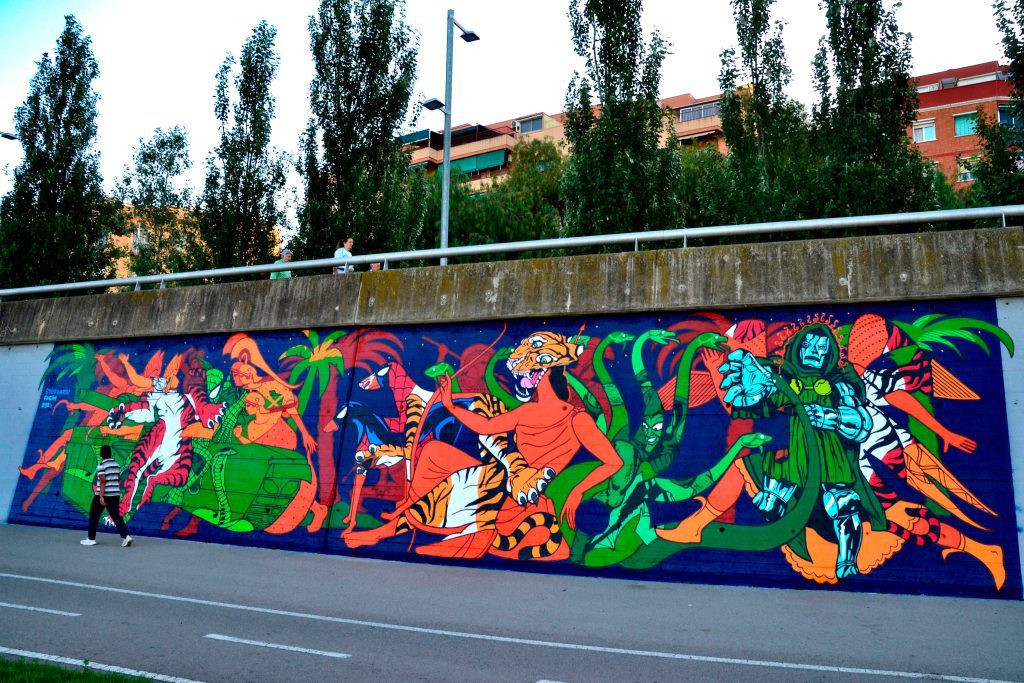
The artwork, created in the surroundings of the Besòs River, combines Fasim’s characteristic experimental language in mural painting, marked by collage, compositional chance, and a strong poetic charge, with a direct call to reflect on contemporary armed conflicts and the need to build spaces for dialogue and coexistence. With this project, Germán Bel also reaffirms his connection to Barcelona and to public space, understood as a place for artistic expression, collective memory, and social transformation.
The art piece represents the continuation of a line of research initiated by the artist in 2018 during the Urban Skills festival in Alcoy, where he presented a bold mural experiment that stood out for its unconventional approach. The proposal translated to a large scale a process close to collage and automatic drawing developed by the historical avant gardes of the 20th century, especially Surrealism promoted by André Breton, the automatist experiments of Paul Émile Borduas, and the experimental spirit of the Dada movement.
Through this method, Fasim introduced into mural painting a spontaneous, intuitive, and fragmentary system of composition, bringing into the urban space resources traditionally associated with studio painting and with the psychological exploration of automatism.
The inspiration for this series emerged after a trip to Paris and a visit to the Louvre Museum, where the artist was able to closely study various ceramic pieces and kraters from the Department of Greek, Etruscan, and Roman Antiquities. The visual impact of those forms, symbols, and fragmented narratives ultimately became the conceptual trigger for a new artistic phase that would later crystallize in this mural series.
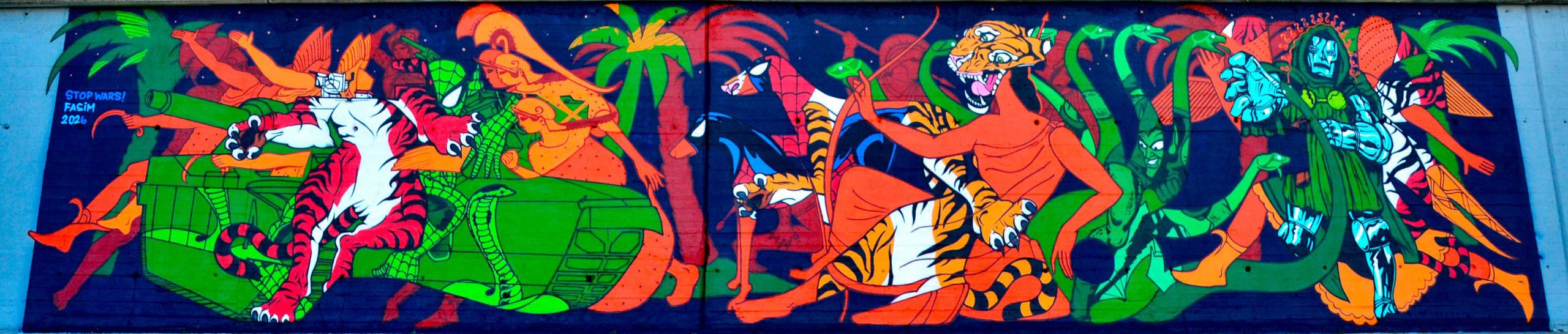
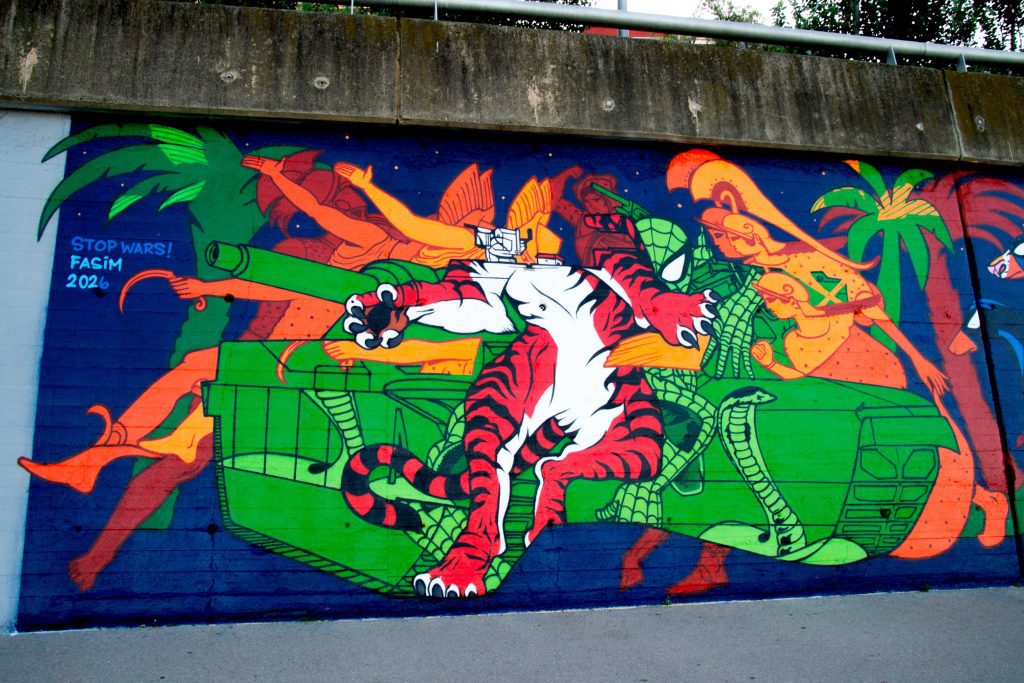
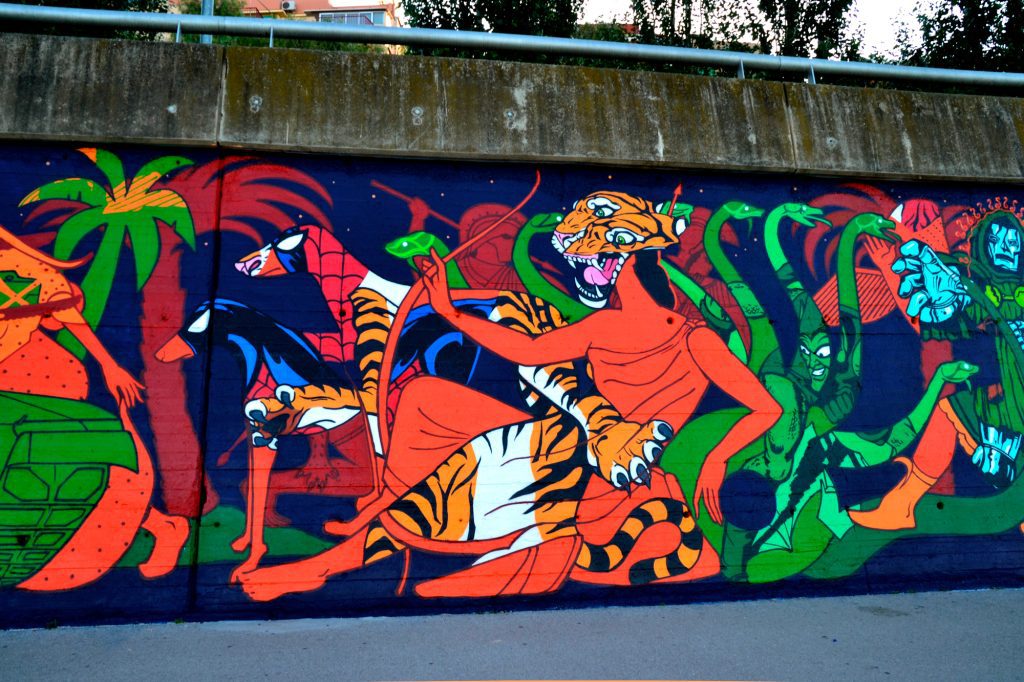
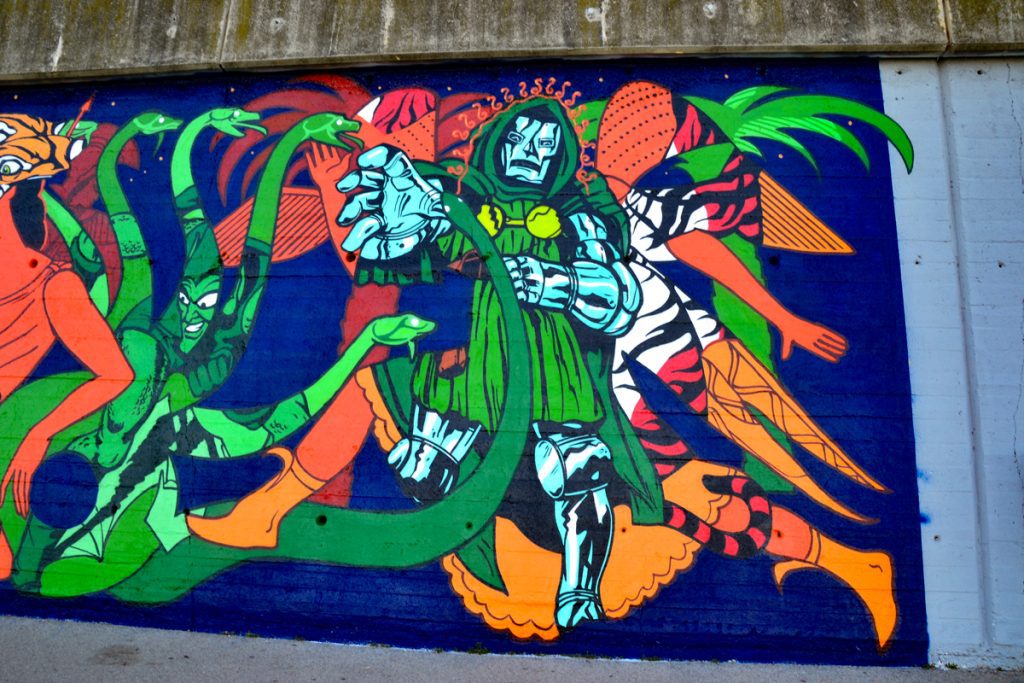
The artwork constructs a kind of contemporary visual mythology of conflict, where classical iconography coexists with war imagery, fragmented bodies, snakes, hybrid figures, and a symbolic bestiary inspired both by traditional tattooing and popular illustration. The composition adopts a structure akin to a narrative or ceremonial frieze, establishing visual connections with Greek Attic pottery, ancient frescoes, and certain ornamental languages reinterpreted through contemporary mural painting.
The visual language also engages with images deeply embedded in our society’s collective imagination: tanks drawn from children’s coloring books, references to comics and contemporary popular culture, as well as symbols of power and aggression represented through tigers, reptiles, and mythological figures. These images, seemingly isolated and devoid of an explicit critical intent, acquire new meaning when placed in relation to one another within the composition, generating an open narrative discourse on violence, power, cultural memory, and contemporary conflicts.
Far from proposing a literal or didactic narrative, the mural offers an ambiguous and poetic reading in which war appears as a recurring historical impulse, shaped by mythological, archaeological, and contemporary references. From the Mediterranean, cradle of some of the earliest representations of warfare in antiquity, to present day conflicts driven by geopolitical and economic interests, the work establishes a symbolic dialogue between past and present. Some visual references drawn from the world of comics and contemporary American popular culture are subtly integrated into this hybrid narrative, reinforcing the idea of a global imaginary shaped by the contemporary spectacularization of conflict.
Technique
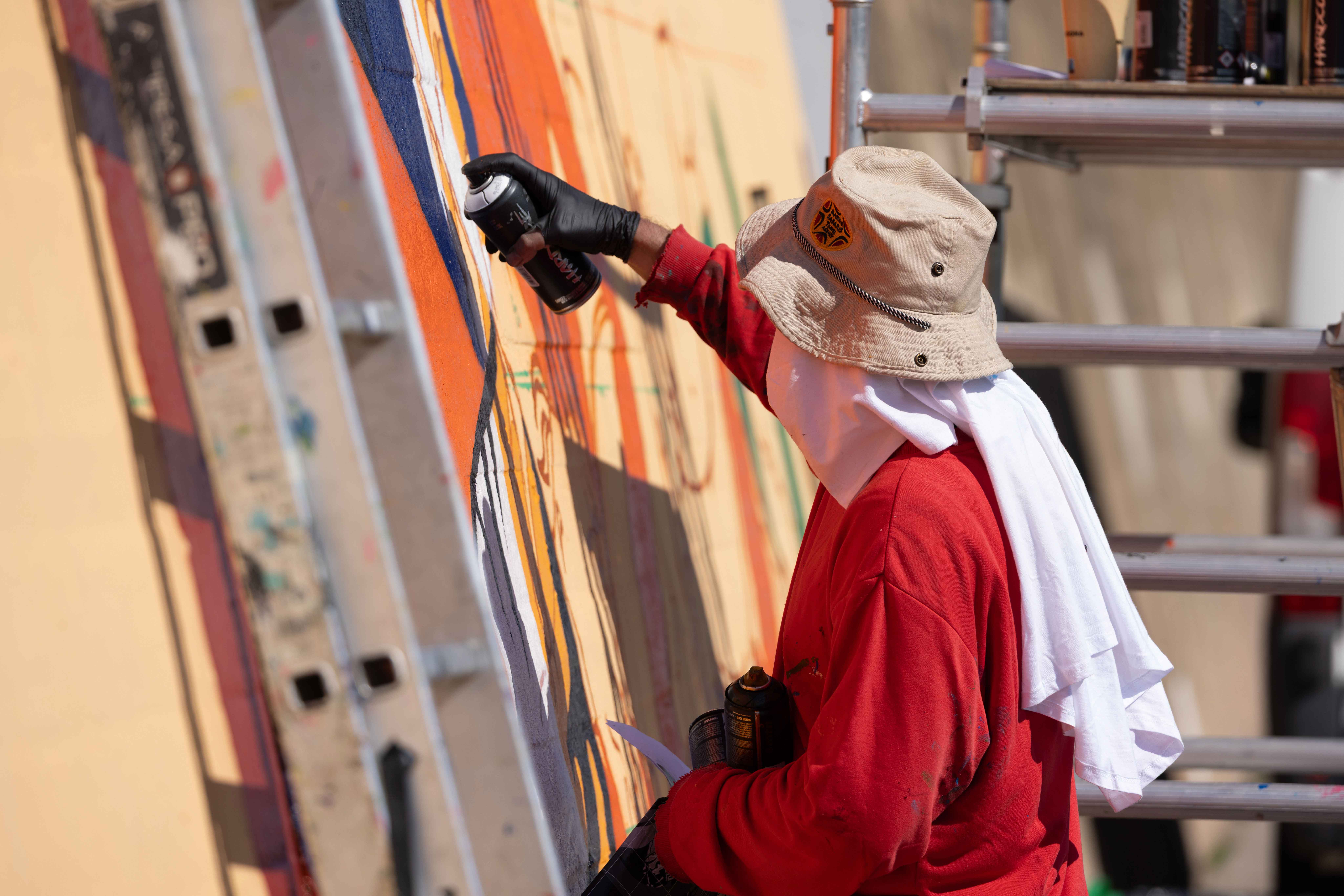
Aerosol
Artist
Fasim